Trampolines
What Actually Goes Under an In‑Ground Trampoline
Drainage, retaining walls and airflow. The three things under the lawn that decide how an in-ground trampoline holds up in South Florida.
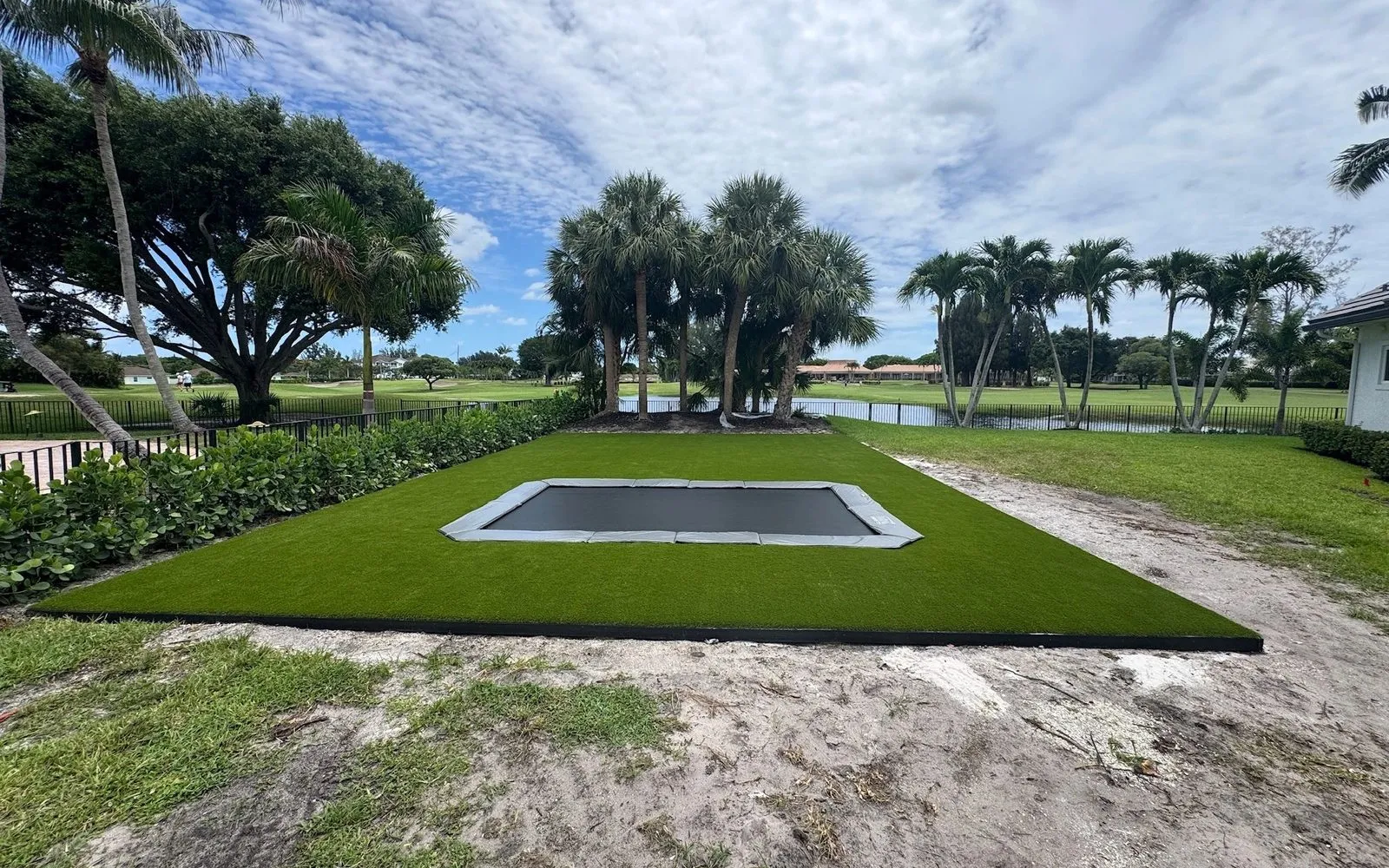
An in-ground trampoline looks like the simplest thing in a yard: a mat, level with the lawn, nothing sticking up. Almost all of the work is in the part you never see. When one goes wrong, it is rarely the trampoline. It is the hole it sits in.
Here is what goes into that hole, and why each part is there.
The dig
It starts with excavation: a pit shaped to the frame and deep enough that the mat can travel without anyone touching bottom. How hard that is depends far more on your yard than on the trampoline. Can a machine get to the spot, or does everything come through a side gate? What are the soil and the grading doing?
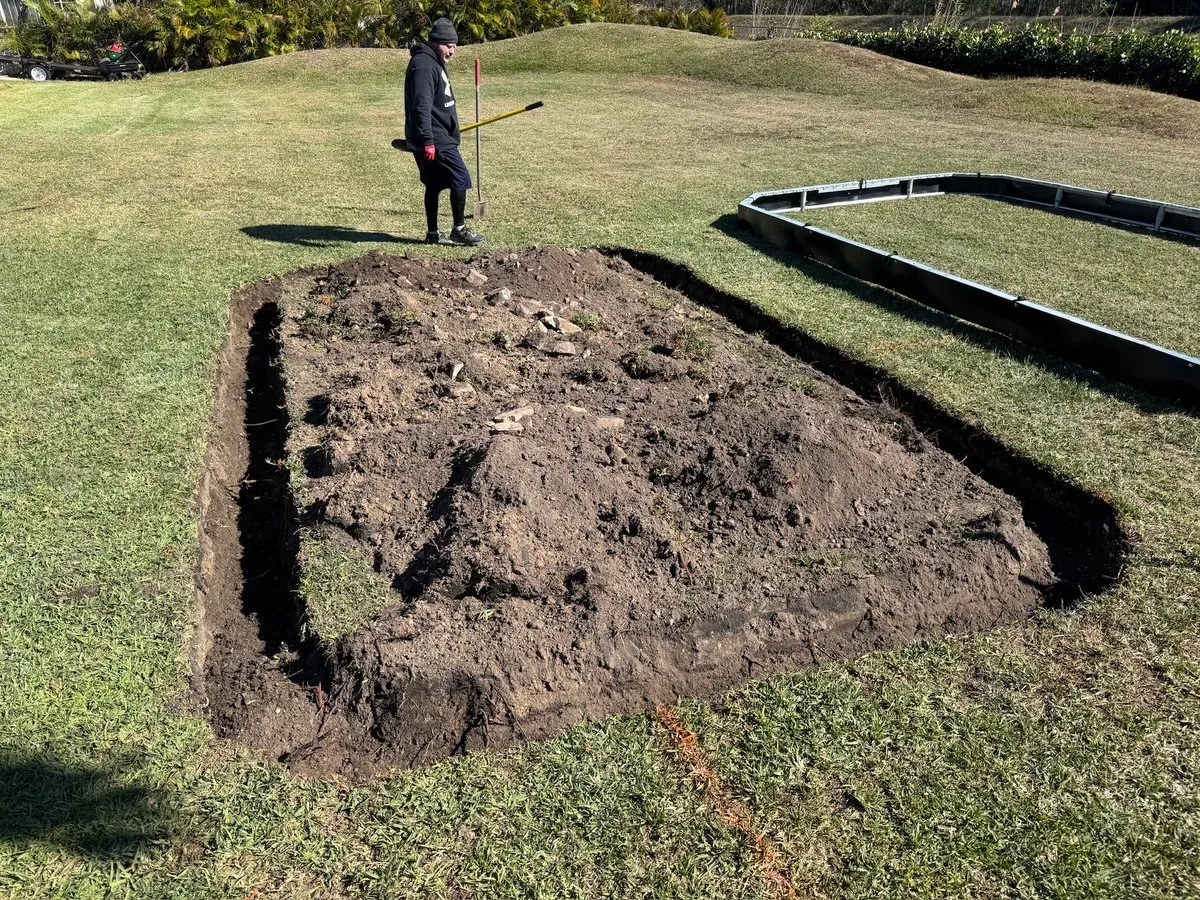 Palm Beach Gardens: the outline cut first, the middle still to come out.
That is most of the reason the in-ground trampolines we build land between $8,000 and $14,000, trampoline included. The trampoline has a fixed price. The ground does not.
The walls
A hole dug in sandy ground does not stay a hole for long. Without something holding the sides back, the soil slumps toward the frame, the lawn around the edge sinks, and the pad stops sitting level. So every pit gets a retaining system around its walls. Some kits ship with theirs: Trampolines.com’s 15×15′ square Pro-Line MAX comes as a complete kit with its retaining wall, which leaves the hole as the only part to dig.
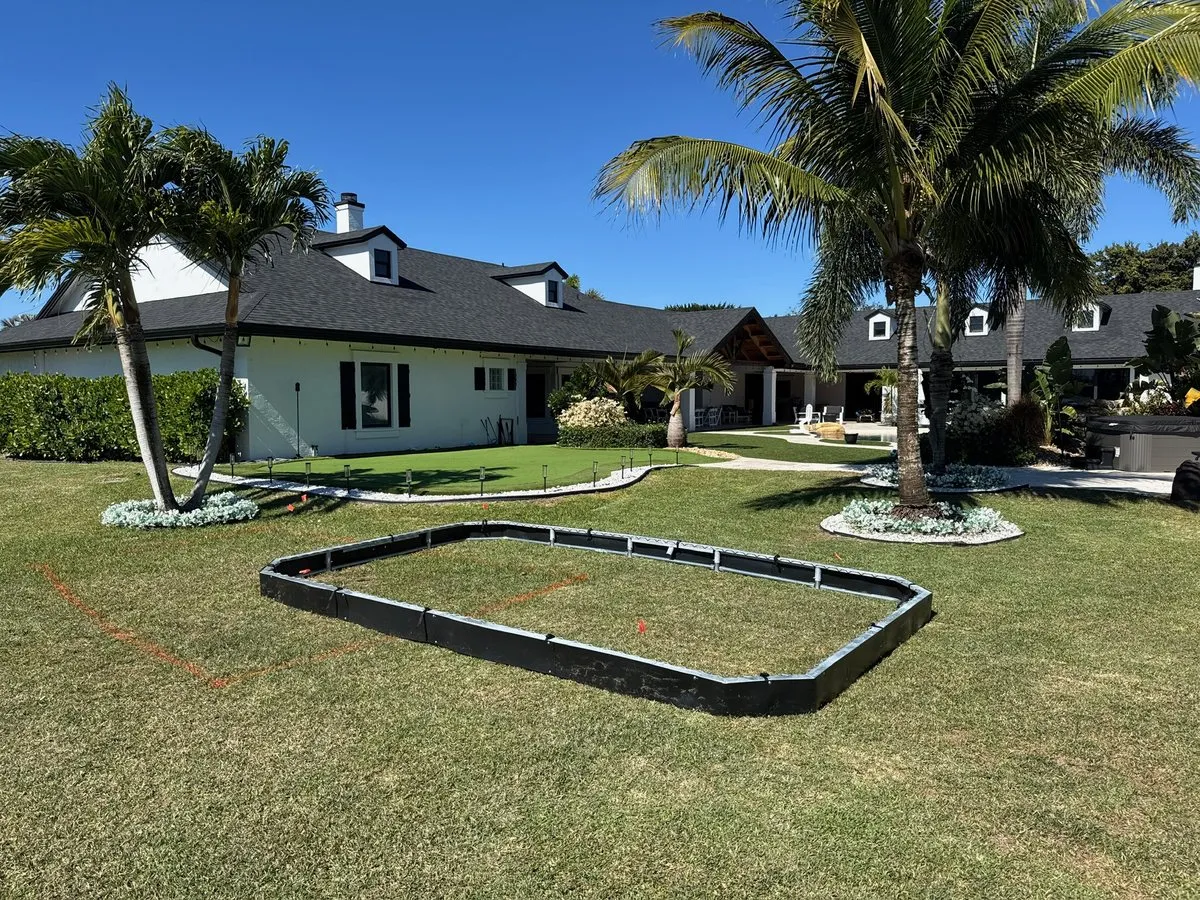 The retaining wall, laid out on the lawn before it goes in the ground.
The water
This is the part that separates a proper install from a hole in the ground. A pit is the lowest point in the yard, so every heavy rain wants to end up in it.
Each pit gets a drainage layer, and where the water table calls for it, a drain line run out to daylight or into a dry well. It is why we look so closely at grading on the first visit. A trampoline that sits in standing water after every afternoon storm will not last, and neither will the lawn around it.
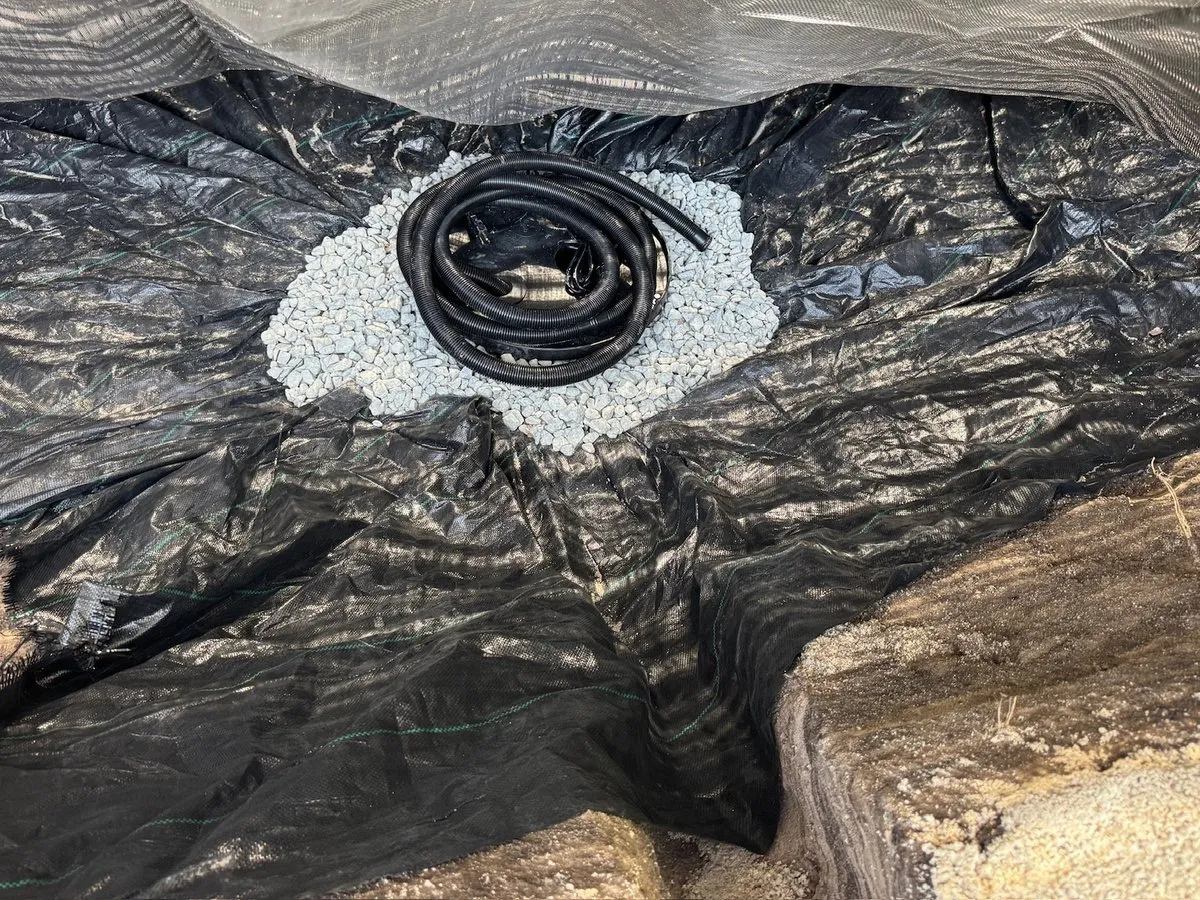 Delray Beach: the top of the sump pump basin at the bottom of the pit, its drain hose coiled in the gravel. The hose is later connected to an underground pipe.
The air
Every bounce pushes the mat down into the pit, and the air underneath has to go somewhere. If it cannot get out, the bounce feels dead and the air forces its way out around the edges of the pad. An above-ground trampoline never has this problem. An in-ground one has to be designed around it.
Trampolines.com handle it in the mat itself. A breathable mat such as their Air X-Tream is perforated, so air passes through it as the mat stretches.
What sits on top
Then the unit goes in: frame, springs, mat, and a safety pad over the springs and frame. Every model we sell carries a lifetime frame warranty on Trampolines.com’s listing. Finally the lawn, or turf, is brought right up to the pad so the whole thing sits flush.
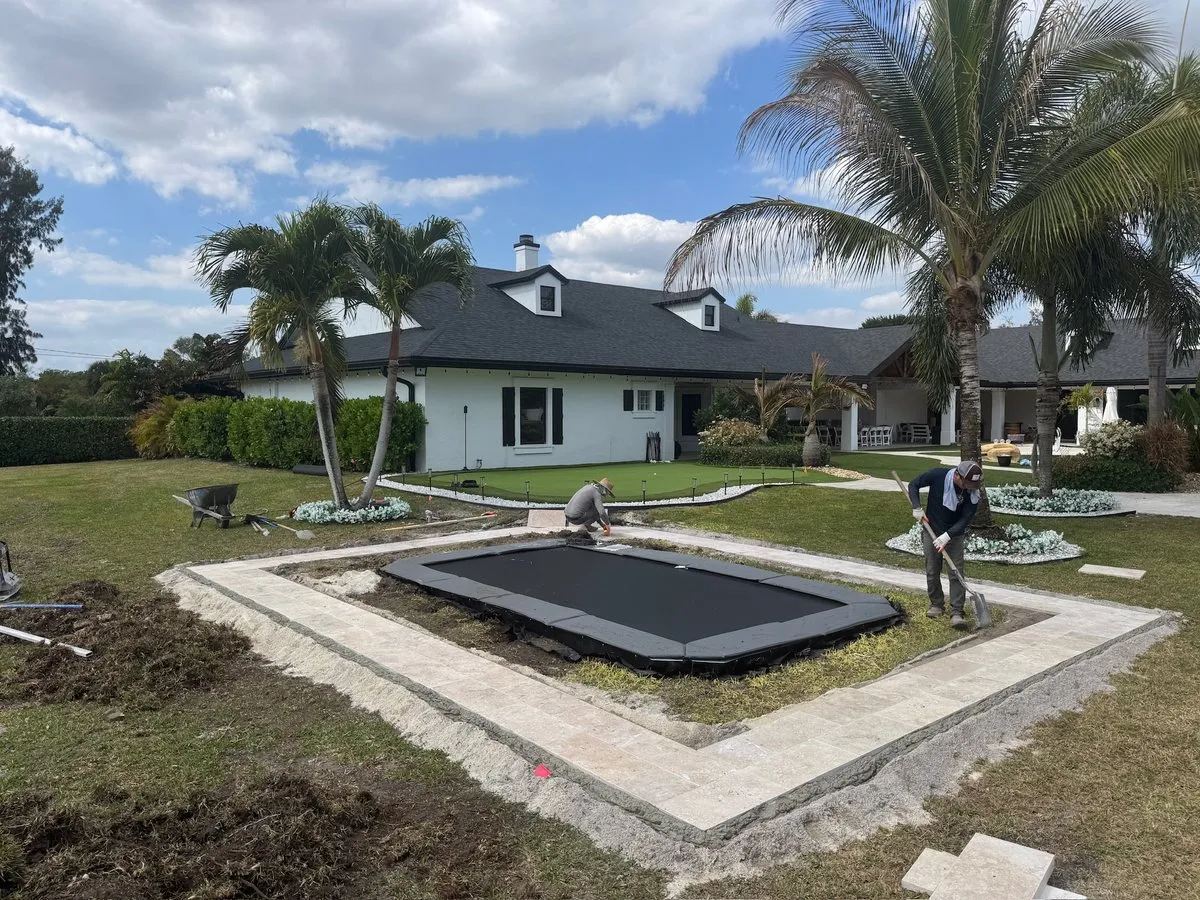 Palm Beach Gardens: the trampoline in, and a paver border going down around it.
Done this way, an in-ground trampoline has real advantages over one on legs. There is no ladder to fall from. It does not blow across the yard in a storm. It does not block the view from the house.
Choosing a size
The range we sell runs from a 12′ round to a 15×15′ square: 12′, 14′ and 15′ rounds, 10×14′, 10×17′ and 12×18′ rectangles, and the square. Rectangles suit a long, narrow yard. Every size is on our shop with its full specifications, and delivery to the lower 48 states is included.
Where to start
The first step is the same for every yard. We come out, look at access, grading and drainage, and give you a real number. The visit is free. If you want a rough idea first, price your yard in about twenty seconds, or ask us for a quote.