Turf
Turf vs. Sod in Palm Beach County
Where each one earns its place in a South Florida yard, and what each one asks of you once it is down.
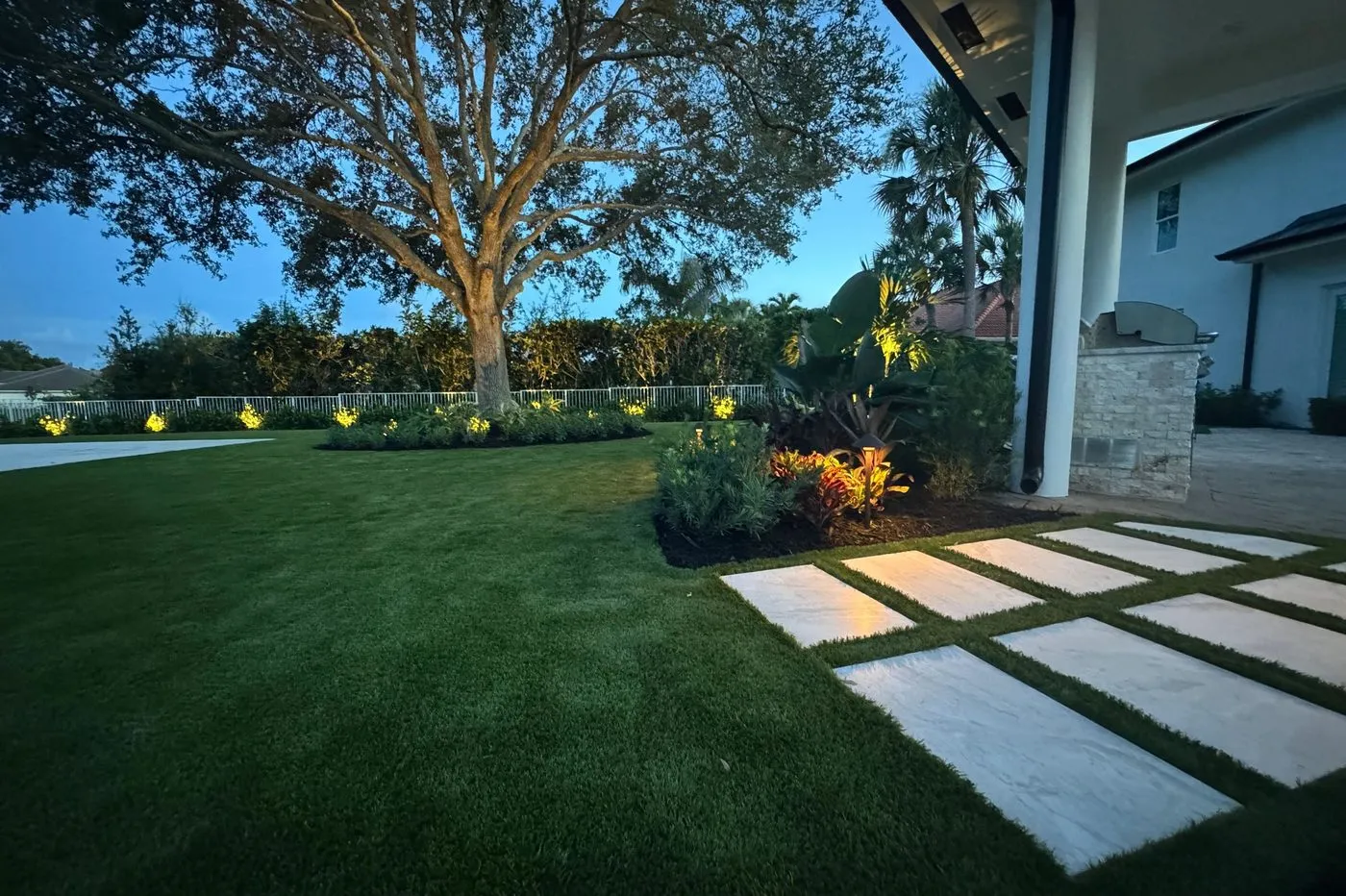
We install artificial turf, and we will still tell you when sod is the better call. They solve different problems, and the right answer usually comes down to how the yard gets used.
What sod asks of you
Sod is a living lawn, and in South Florida it is a lawn that works hard. It wants mowing for most of the year, fertilizer, and an eye kept out for pests and fungus.
It also wants water, and watering here is rationed. The South Florida Water Management District’s year-round rule limits landscape watering to two or three set days a week, depending on where you live, and never between 10 a.m. and 4 p.m. Your town or county may set tighter rules.
Where sod struggles
Grass does badly in exactly the places a family yard takes the most wear:
- the patch under a basketball goal
- the ring around a trampoline
- the run where the dog does laps
- the shade under a big oak, where it thins out on its own
Those spots go to bare dirt, then to mud once the rainy season arrives. That is usually the moment people start asking about turf.
What turf asks of you
No mowing, no fertilizer, no watering days. Upkeep is rinsing it down, brushing the fibers back up now and then, and clearing leaves. Pet areas need rinsing more often.
What matters most is underneath it. Turf goes down over a compacted base, and the base matters more than the turf itself. Compacted properly, it stays flat and drains. Rushed, it will ripple within a couple of seasons. When you compare quotes, ask what is going under the turf, not just which turf it is.
Where turf struggles
It gets hot. In full afternoon sun, synthetic turf runs noticeably hotter than grass underfoot, which matters for bare feet and for pets. Shade, or a play area placed out of the harshest sun, helps.
It also costs more to put in than sod. What you get back is the time, water and upkeep you are no longer spending.
The honest split
For a lot of yards the answer is both: turf where the wear is, and grass for everything else. The high-traffic places are where turf earns its keep:
- around an in-ground trampoline
- under the goal
- a putting green
- a dog run
- the strip beside the pool, where clippings would end up in the water
A big open lawn you mostly look at can stay grass, as long as it is watered on the right days.
Where to start
The estimator on our homepage gives you a planning range for turf in about twenty seconds. For a real number, the on-site visit is free: we measure, check how the yard drains, and tell you honestly which parts are worth turfing. Ask us for a quote.